
 Apple Podcasts
 Spotify
 Deezer
 iHeartRadio
 Goodpods
Let me know what you think of this episode?
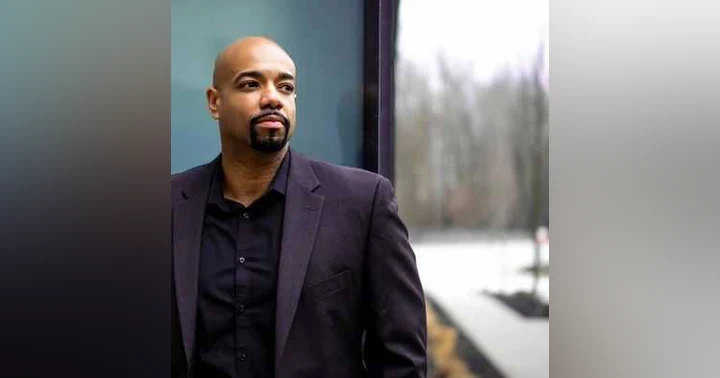
What happens when you stop treating the Bible as an inherited object and start treating it like evidence? Matthew Mcwhorter, a former attorney, joins us to walk through the most practical version of the biblical canon question we have heard: which Bible are we actually talking about when we say “the Bible,” and would a neutral judge trust the witnesses behind it?
Matthew tells the story of starting as a skeptic who simply wanted to read the books he was named after, then discovering the sheer scale of the Protestant vs Catholic vs Orthodox Bible divide. From there, he builds a case-centered approach to canon formation that connects apologetics to the Deuterocanonical books (often called the Apocrypha) instead of keeping those debates in separate boxes. We dig into why figures like Irenaeus matter, how early church fathers are used in arguments about both the Old Testament and the New Testament, and why consistency matters if you want Christianity to be provable rather than just preferable.
We also talk about Jewish scholarship on when the Jewish Bible (Tanakh) became fixed, how New Testament allusions can point back to disputed texts, and why reading multiple Bible translations can clarify meaning rather than create confusion. Matthew shares one of his most surprising finds involving Two Maccabees, the Talmud, and a martyrdom story that shows how messy the historical record can be when people argue from selective sources.
If you care about historical Christianity, Bible canon, early church history, or the question of what counts as reliable evidence, this conversation gives you a clear framework and real sources to chase down. Check out Matthew at canoncrossfire.com and follow @CanonCrossfire, then subscribe, share this with a friend, and leave a review with your biggest canon question.
Want to be a financial supporter of the show, click here,
https://www.buzzsprout.com/1754677/supporters/new
Follow and subscribe to the podcast here, and get weekly updates on when new episodes are released.
https://podcasts.apple.com/us/podcast/dorsey-ross-show/id1495921329
Social Media Links,
Instagram
https://www.instagram.com/dorsey.ross/
Facebook
https://www.facebook.com/DROCKROSS/
My Book
Amazon Book Overcomer
https://bit.ly/4h7NGIP
Want to be a guest on Dorsey Ross Show? Send Dorsey Ross a message on PodMatch, here:
https://www.podmatch.com/hostdetailpreview/1615423845838x127949785844303500
Affiliate Link For Podmatch
https://www.joinpodmatch.com/dorseyross
Thank You for Listening, I hope you enjoyed this episode and that it encouraged you. Please like, share, and leave a review.
Welcome And The Big Question
SPEAKER_00Hello everyone, thank you again for joining us in another episode of the Dorsey Us Show. Today's guest brings a truly unique perspective to one of the most debated topics in Christianity, the Bible itself. As a former attorney, he broke his faith not just with belief, but with investigation, putting scripture, history, and tradition on trial in a way that counts as both skeptics and believers alike. Matthew, thank you, Matthew McCorsa, thank you so much for coming on the show today. Thank you. God bless. Happy to be here. So you wrote a book, and your book asks a bold question. What if if the Bible undermines Christianity itself? Tell us about that and why you think that that might be the case.
SPEAKER_01Yeah, so I I was a skeptic. I had been named after the Bible, Matthew, Mark, but the you know, the first two gospels. But that was because my mom wanted to make my grandfather happy. She didn't teach us to pray or go to church or read the Bible or anything. So I just happened to be named after the books. And late in life, after a legal career and some massive medical problems, I had retired
A Skeptic Buys Every Bible
SPEAKER_01and uh was looking to check off things on my bucket list. And one of them was to read the books I was named after. So I started the process of reading the books, and that began on Amazon. I didn't have a church or anybody bringing me into this, so I just went on to Amazon to go buy a Bible and discovered there are so many Bibles. Big picture there are Catholic Bibles, Protestant Bibles, Orthodox Bibles. Those are three different collections of books that they have different books in them. The Protestants are the smallest Bible, the Catholics are kind of in the middle of the Orthodox and the largest Bible. And then uh within each of those, there can be some variations. There are different kinds of Protestant and Orthodox Bibles, and then there's different translations, and there's different commentaries from all these denominations. And I didn't know what to do, so I just bought them all. You can kind of see that behind me. But I just piled up books all around me and started reading. So I started reading Matthew chapter one. Over the course of a week, I would read it across a hundred different Bibles and Bible commentaries. Then I would move on to chapter two. You know, each week took me five years to read the New Testament. But that's the kind of guy I am. I, you know, this was all fun to me. So I was enjoying the reading, learned a lot, started wondering if Christianity was true, because I was, you know, I was learning so much about this that I didn't understand at all when I started this journey. You know, so I started to become really interested in whether this was a true story. So then I'm piling up books on the case for Christ, as they call it, the case, the historical evidence that Jesus was a real person, that these apostles worked, walked with him, that this is what they testify to, that he rose from the dead, and that this is what he said, etc. And as I'm doing that, I'm in this weird position. I have no church telling me what the correct Bible is. I am reading the case for Christ and these arguments over the Bible at the same time, with all this legal experience in my past. And I started recognizing a problem that to me is just core to this, that the actual fight over whether or not Christianity is true would really come down to whether or not the same people who tell you the same things about the New Testament and the Old Testament can be trusted, when in particular for the Protestants, a lot of Protestants will tell you that they were wrong about the Old Testament. And what these people actually said is we got these books from the Apostles. And they said that for both the New Testament and the Old Testament. These were handed down, these were taught by the apostles. If that's what they said, would a neutral judge really trust them when they have, as a lawyer, would think of it, conflicting testimony on the Old Testament and the New Testament? Can a Protestant sort of explain that away, et cetera? So I went on this massive research project because to me, this was a crucial question of are these books real? Are the Protestants right that they weren't part of the early days of Christianity, or are the other groups right that they were, et cetera? So I wanted to find out what the evidence was that I should consider in this decision. And the problem I had was I couldn't buy that book. No one else had done, had seen this issue, focused on its importance, and gone and done all the work. So I went out and did it. That's what my book is. It is a presentation of that evidence for everybody to read. And I wanted to know the answers to three simple questions. One was, what does Jewish scholarship say about these extra books? I hear what Protestants have to say. I get a completely contradictory story from the Catholics. What do the Jews say? That's what I wanted to know. Second thing is I wanted to know where the Bible might be referencing these books. Going through Protestant New Testaments, you will find hundreds of times that Protestant scholars believe that the New Testament is saying something about these books. I just collected all that, again, for everybody to read, but I wanted to know what those were. In a normal discussion about whether these books should be in your Bible, someone makes a very conclusory statement of like, well, those are only illusions. They're not important. Like, I want to read them. I want to know what they are before I make that decision. So that's what I did. I collected that. The third thing, and the most important thing was I wanted to know what every Christian in the first 450 years of Christianity ever said about these books, what the universe of comments was, and then start making decisions from there. What you'll find is, you know, I wasn't translating anything. I wasn't going out and finding documents in monasteries or in the desert. I was pulling things in that scholars, in theory, you know, the field of scholarship fully knows that these things exist, has translated them, but no one brought all of those comments together so that you can look at them all at once in this question of whether we should accept these books or not. So I did that work. I assembled it. I show people how I did it. There's an index called Biblia Patristica. You go to that index, you find out where all the references are, then you go to the original books, you pull them together. I give everybody the quotes for everyone to read, and then I show you the links to go out and read them so that you can see them for yourselves, read the full context, et cetera. So no one has to take my word for it. I just wanted to assemble that evidence. I realized how important this would be for an actual case. That's why I assembled it, and now I give it to everybody to read. So that's the point. Again, it all started with the recognition that in an actual case, this is what the lawyers would be fighting over. Um, we wouldn't be discussing so much the evidence for the New Testament. Okay, you got evidence for the New Testament. That's good. The question is, can we trust it? Would we believe it? Does it rule the day at the end of the day in the court's mind? And to me, that really comes down to these extra books. So that's why I became obsessed with it. That's why I did this work that nobody else had done. I should also say, as I was doing all of this, I had this horrible fear that I was going to die before I got all this out there. But it's like I had gone on this massive research project. I'm like, I d I gotta get this out there so that other people will know it exists and nothing else. So that's what I've told my book. It's like I I could breathe a huge sigh of relief that it is now available for everyone else to uh benefit from my craziness and hard work.
SPEAKER_00Right. What
The Research Plan And Sources
SPEAKER_00led you to believe or maybe even consider that the Protestant Bible may even undermine Christianity? And what was the outcome of your research on that?
SPEAKER_01Yeah, so it's that simple question or that simple moment that I was in where the question appeared to me of, excuse me, you're talking about the evidence I'm reading about over here. So I would read someone saying in connection with the canon debate, they would say, Well, that's the earliest evidence for this book that the Catholics accept and the Protestants don't. Well, that comes from a guy named Irenaeus in 177 A.D. That's very late. Why would we trust that evidence? And then I'm over here in the case for Christ. It turns out that Irenaeus in 177 AD is the first person to tell us that there are four Gospels, only four Gospels. We don't accept all the other fake gospels, but all four of these are true. It's called the fourfold gospel. It's one of the most important things as a Christian that we believe. And the first guy to ever say that was 177 A.D. Irenaeus, the same guy that I'm being told was very late and we shouldn't trust him on the Old Testament. It's that realization of like, oh my goodness, do people not realize that there's this conflict? And how would they explain that away? And are we being fair in uh making that comparison, that discussion between these two things? Because it's not just whether you can believe it or whether you can talk your way past it, it's whether you can convince a judge. Uh, you know, in every trial, the prosecutor says the guy is guilty and the defendant says I didn't do it. And it's really which side can convince the judge, not which side has a story. They're both going to tell stories. So it was realizing that that that's the real crux of it that led me on this to focus on this so much. As far as what I found, I actually think a huge portion of this is that um Protestants are compartmentalizing this debate into two pieces of their brain. They're arguing with Catholics on what the Bible should be, and they're arguing with skeptics on whether Christianity is true, and that's sort of letting them make contradictory statements. I show over and over, just there's a lot of not being honest with the evidence, not being fair and consistent across those two discussions. I don't think anybody can argue with me on that stuff. Like that's just showing you the two comments side by side, and then I show you the evidence that leads me to think that one side is correct, which is we can prove Christianity. But if you actually reject these books, if you claim that the apostles didn't teach these books, I think you would lose the case. I think it the case can be won, but you have to be very clear as to that the apostles did teach these books. And then there's a theological question of whether that means they go in your Bible. I don't answer the theological question. But the historical question of did they teach these, it's the same evidence that you're relying on to say that they taught the gospels in the New Testament. And if you don't want to accept it, that's up to you. But you can't expect an honest, neutral judge to say that you're right on the New Testament when you yourself are admitting the evidence doesn't work for the Old Testament. That's that's my view. But I don't force that on the reader. That's just my conclusion. For the reader, I'm just presenting the evidence in the problem, you make your own decisions.
SPEAKER_00Right. Now, as you said earlier, that there's you know different books in each in each bib in the Bible, you know, Protestant, Catholic, you know, Orthodox. Did you come to the conclusion that the Bible, the 66 original books that we have in the in the Protestant Bible, those are all true, factful, and that the other books in the Orthodox and and Catholic Bibles are not accurate or not true?
SPEAKER_01So, yeah, the the evidence for the books as far as being accepted and taught by the apostles, to me is actually the same through the 73 books of the Catholic Bible. So that's again one of the things that I I find that people are just not being honest about is like we know, thanks to Josh McDowell, for example, that produced a book called Evidence That Demands a Verdict, he presents all the evidence for the 66 and sets it out for you. So you know what's being considered there to show that those books are authentic. Make a fair comparison to these extra books. I think that they meet that standard. I show that in the in the case. Now, whether you think that they are true in a divinely inspired sense, whether they are true as to all of their facts, whether you have other, what I think of as theological reasons why you might not accept those books, that's something I leave to the reader. My issue was the evidence for them as being taught by the apostles. That's where I personally don't feel that there's there's really much grounds for debate, that the evidence is the same. I do understand that Protestants could distinguish those books on a theological basis. As I say, I just leave that to the reader. You make your own choices. That's that's you know, that's a discussion as to what a church is, why a church gets to make decisions, why you feel bound by it, that kind of thing. That that's a bigger picture item that all the churches have to answer, the Catholics, the Orthodox, and the Protestants, but is explaining what that is and why you think that you have the truth in your own side. But that's a different inquiry than does the historical evidence show that the apostles taught that. Yeah. You know, that's the same question you would ask about Julius Caesar, right? Did he really say this? It's the same evidence, it's the same kind of analysis you perform it here. And my view is the evidence points back to the apostles.
SPEAKER_00Right. And you also mentioned earlier ago that you looked at what the Jewish, you know, people say about the book as well. What did what were your conclusion with that?
SPEAKER_01Yeah, so the Jews accept the exact same list of books as Protestants do, but the explanations of why and when and how that decision was made is where I think again, people are not being honest about what what happened in early Judaism because the Jews will tell you all that came after Christ. What they really mean is it came after the fall of the temple, which is actually after Christ, but they're they're not real concerned with the exact moment of Christ, of course, as we are. But what they are saying is this
The Canon Conflict That Hits Trust
SPEAKER_01was a later decision by rabbis before that. They say the the phrase I like it had fuzzy edges. There's a core of books that they agree that everybody accepted. Beyond that, there are other books that people accepted. It's just a question of where, when, how, who, but they were out there. And they're not able to say that those weren't the majority of Jews who accepted those books, or those weren't not the official leaders of Judaism that accepted that book. That's not what they conclude. Their view of the evidence is that this was still being debated well into the Christian era and was a decision. So then the Protestants would ultimately it starts before Protestantism, but within the church, but there are people who ultimately would become the Protestants in the Protestant Bible who have the view that you should have the exact same Old Testament as the Jews have. You do have that. What you will find, though, is that people explain that history in a way that the Jews don't agree with them. That they'll say that, well, the, you know, at the time of Christ it was well settled what the books were, that prophecy had left Judaism 400 years earlier, so it couldn't possibly include these extra books. The Jews don't believe that. Um, that is not what they write in their own books. And I I point people to the simplest piece of Jewish scholarship in the English language, which is their own study Bible, where they, you know, it's like a line-by-line commentary of their own on their Old Testament, and they have many essays in there explaining where they get this Bible. That Bible is used, that study Bible is used by all three major branches of Judaism, and it tells you in no uncertain terms that they think it came after Christ. So again, you could say all that's wrong. I have no problem with you saying that's all that's wrong. I just want to know what they said. And what I don't find when I'm reading the Protestant books is an explanation of, well, this is our belief, but the Jews don't agree with us. I define that myself. So that's what I'm trying to show people. Is there it is in black and white. You you make your own decision, but they don't agree with that.
SPEAKER_00Now, if the I mean, the Jews today don't believe that Christ was the Messiah, and they're still waiting for Messiah. Why would they accept those books of the New Testament if they don't believe that Christ was the Messiah?
SPEAKER_01Yeah, I'm sorry, I'm talking about the Old Testament. They accept the books of the Old Testament, they reject the new. The thing, though, that I I've also learned as part of my thing is it it's difficult to even talk about what Jews believe. They are extremely diverse. There are some who think messiahs have already appeared on this earth. There are those that are still waiting, and there are those who think Messiahism is a whole mistake. So, like you read through Judaism Judish thought, and uh it's it's incredibly diverse. So that was that was also something I had no idea of until I started this journey.
SPEAKER_00What made you apply, you know, your thought and your book has a courtroom case? And what made you make you apply legal reasoning to the allegory?
SPEAKER_01You know, it's funny, but it's it wasn't my idea. I just liked it. But like Lee Strobel presents the case for Christ with his book. You know, he sold 10 million copies. I guess a lot of people like it. But I was reading it, so I was in that frame of mind already, and I just continued it, right? So it's like I didn't invent it, I didn't bring it to it myself. It was that when I went out for books to try to prove Christianity, that's the books I was seeing. There's people, of course, trying to uh mooch off of Lee's Lee's trouble success. So there's like case for the resurrection of Jesus, you know, the case for the gospels. There's other books out there, all on the same theme. And I just love that, you know, that fits my worldview, it fits my experience. And I just thought of it that way. You can ask, and I think it is a perfectly fair question of should we be analyzing this as if it was a case? I would say that at a minimum, it's a wonderful thought experiment. It encourages you to be honest about what the evidence is and honest as to what you can prove. You know, you need to present evidence for each one of your beliefs, and then you have to show it to a neutral judge. It's not just a question of whether you believe it. You know, I you can believe all sorts of crazy things. It's can you prove it to the judge? I find it's just a wonderful thought experiment. I think it is a fair question as to whether it's the final answer on these questions, but I think it's a good way to think about things, and I I encourage people to do it. The other, I'll say two things, I guess. Number one, I wrote my book on that basis. So my about half of my book is detailed evidence. You don't have to read that if you don't want to. Half of it, though, the other half is what I think of as jury exhibits. This is how I would present my case to the little old ladies on the jury. Like it's not complicated. It might be detailed, but it it's easy to see. I'm presenting it to you. So I do that. And I would also say if you're going to take this seriously, you should try to be one of those little old ladies on the jury make the decision. How do they how do you find out who's telling the truth between the prosecutor saying this guy's a murderer and the guy saying, no, I'm not? Well, first off, you examine all of the evidence, then you listen to the two sides argue because once you've seen the evidence, it's a lot harder for you to get confused or misled. You know what the evidence is. You can now look at people and see what they're saying and see who's telling the truth much better. And then you make a decision at the end. The unfortunate thing when I'm talking to other people, they feel that they were just handed a Bible. They're not listening, they're not looking at all the evidence, then listening to the arguments, then making a decision. They've already made a decision. And I I truly believe you should try to put yourself back into that original stage of being a little old lady on the jury and saying, okay, I'm gonna look at all the evidence, then I'm gonna read both sides, then I'm gonna make a decision. And if you come to the same conclusion you had at the beginning, then you know you made a good decision, right? Don't be afraid to do that. We are all supposed to be pursuing the truth, and you should not be afraid to pursue the truth. And to me, that's the proper way to uh think about it and go after the truth so that you don't get misled.
SPEAKER_00For listeners who never thought about the biblical canning, why should they care? Yeah.
SPEAKER_01That, you know, that's a huge part of this. I I run into lots of people who will say, Well, I've always been kind of interested in that, and I'd like to read about it. And I say, Well, here I have a book on it, and they say, I said I'd like to read about it someday. I didn't say I'm gonna read it now. Like that seems to be an awful lot of uh of uh response out there of people that they're mildly interested in it, but they're not consumed by the desire to assure themselves that they have the right Bible. I actually I find that a little strange myself as an outsider coming to Christianity, particularly if you're a Bible-based Christian, you would think the most important thing. Do you have the right Bible? Can you assure yourself of that fact? I find that a little strange, but it does seem that I'm kind of unique in my worldview on that. Not everybody feels that way. But I hope as I show people why I was obsessed with this, how this arose in my own inquiry, even if you didn't come from that background, maybe you were just born Christian and going to the same church your parents went to, et cetera. But I hope you can see why that's an honest approach and a way to think about things and maybe wonder for yourself whether you should go down that journey too. But to me, it's crucial to whether or not Christianity is true. And if that's it, you know, it's a part of that discussion. It's a part of whether you have the right Bible. And I think that question goes into whether you have the right church and whether you're really following the truth or whether you've been misled. Like to me, that's all wrapped up into one. I I thought I view this as kind of, well, it's all I talk about. So I I guess I would be the sort of person who thinks it's the only thing to talk about, right? Because it's all I do talk about. But that's kind of my worldview is I just to me, you start at the foundation, this is the foundation. Go down to bracks stacks and assure yourself that you you believe in the truth, the real truth.
SPEAKER_00Yeah. Now we know that the Bible is true because that's what we're talking about today, but we there's also a lot of different translations out there. During your study, did you look at different translations and see, hey, this translation may not be, you know, accurate or maybe misleading or different things of that nature? Yeah.
SPEAKER_01Yeah, it actually was worse than that because I I
What Jewish Scholarship Actually Says
SPEAKER_01buy from Amazon and then I would go to local bookstores here in Ohio where I live. There was a real cult here in Columbus uh back in like the 80s and 90s. So I still find their books on bookshelves and I didn't know what I was buying. So I'm like, okay, look, looks good. Throw it in the box and walk out of the bookstore with a giant pile of box uh box of books, right? Get home and suddenly I'm reading radically different translations where somebody is basically putting his own views as if they come out of the mouth of Jesus, right? And there's a lot of that out there. I shouldn't say a lot. That's a small fraction of this stuff. There's a lot more honest debate about what sentences mean and words mean and how to translate them. I have a lot of life experience with that because I was an international corporate attorney dealing with translations and trying to explain things, but also fighting over what things mean in English. You know, we all we all agree on what the fine print in your cell phone contract says in English, but good luck trying to get agreement between you and the cell phone company, right? Like, you know, you know, you may agree on the words on the page, those are the words on the page, but not what they really mean, et cetera. And that's a normal fight that we have here in the English language. So to me, I find it very fulfilling to read all of these different translations, see it from many different angles. And I feel like I'm sort of triangulating down to the core uh uh and seeing it from many different lights is more uplifting and fulfilling. There's a lot of people who view the opposite, that they only want to read one particular English translation. I think that's kind of a mistake. I think a lot of these translations, you can see the point the other guy's trying to make with his translation versus the point that this guy's trying to make with his translation. I view that. Is fulfilling. It says it kind of says both of them. It says both of them, you know, that sort of thing. And you can get into the the nitty-gritty of the translations. But to me, I think it's a mistake to think that there's only one way to look at it or see it. And uh anyway, I I I did look into that. There's a other problem, too, that you have to address, which is, you know, there's sentences of the Bible that aren't found in certain manuscripts from 2,000 years ago, et cetera. You know, does that sentence belong in there? Little debates. Uh, to be honest, the Christian message shines through no matter what. Those things are, and you'll find this all the you know, the Christian scholars will tell you this, but like when you go through these one by one, line by line, they don't amount to a whole lot. You know, the Christian message comes shining through, but some of the little details and little specifics can indeed be different.
SPEAKER_00What's the strongest piece of evidence you found that supplies to you?
SPEAKER_01Yeah, so the the, you know, ultimately, I guess you would say the surprise was that Christianity was true, right? You know, that's why I converted and came. So, you know, but that's not one piece of evidence, that's a lot of evidence. And it's, you know, as has been said by many people, you don't convert over one thing. It's all of a sudden everything points you to it. And that's what happened with me. Everything pointed me to Christianity, and I ultimately became it. As far as the sort of specifics of what's in my book and the specific research that I did, there were like 12 different things that I was reading and saying to myself, I can't believe I'm the only person who knows this. And it's not that I'm I am not technically the only person who knows it. There are other scholars in other fields who might know something, but no one pulled their scholarship back into this question. So, one example, it's right there in black and white in the Jewish scholarship. There's a book the Jews have called the Talmud, um, which is is an explaining a lot of Judaism. It's not their official scriptures, but it is the first book that lists what these official scriptures are. So it is the book that uh authenticates what they now have as their Bible, the Jewish Bible. Uh or the uh Talmud, as they they call it. Um, but or the Tanakh, I'm sorry, as they call it. But this other book, the Talmud, says that. It lists them out, it lists 22 books. Not on that book is a book the Catholics accept called Two Maccabees. And people will point to that list and say, well, yes, it came after Christ, but we think it points back to the original time of Christ. That's the general Protestant argument. And I look into this from the Jewish side and I discovered something, which is that in the Talmud itself, there is a story that was stolen from two Maccabees, plagiarized, and put into the Talmud. So in two Maccabees, there's a story of a woman with seven sons. She watches all seven of her sons be tortured and killed before her, but none of them give up the faith. And it's a very uplifting story as you're watching this horrible incident occur. That's set in the time of the Maccabees. You know, that's the original story. Well, then later in this Talmud, the rabbis gave their people a woman, a different woman with seven sons in the Roman Empire, also watching all seven sons go through martyrdom. So it's basically it's the same plot, the same concept. It's just pulled from one book to another and completely changed and handed to people. I find this all of a sudden in this book, in the Jewish books explaining this, and realizing that that's in this Talmud that people are citing to as evidence that the Jews at the time of Christ didn't accept the story in two Maccabees. That's not really what the Jews are telling you. What the Jews are telling you is they changed the story by the time of the Talmud. And meanwhile, I'm reading these Protestant Bible commentaries. And the Protestant Bible commentaries are telling me that the epistle to the Hebrews, the Jews, clearly mentions two Maccabees and this woman with seven sons in it. The gospel to the Jews, which is what Matthew was, it's it's the Jewish gospel written to the most Jewish crowd. It refers to the women with seven sons. And it's actually Jesus who's doing the referring in there. So you have this debate over whether or not these books go back to the time of Christ. And I will find somebody who has no idea this story, about this story being stolen, will be quoting for you, well, it's in the Talmud, it's not on the list. I'm looking at evidence from the Protestant scholars showing me that this is referred to in the Epistle of the Hebrews, the Gospel of the Jews, by Jesus Christ. And I know the Jewish scholars are here to testify that that story was stolen and replaced in the Talmud. Like, that is just such a devastating case, at least on the face of it, for the Protestant argument against two Maccabees. And yet I can't find anybody who knows what I'm talking about. Like over I couldn't find it in my books. I haven't found it in through all my interviews. It's right there. Ask the Jewish scholars, you'll find it. It's just no one brought that back into this case. That was one of the more just stunning moments of like, how am I the only person who knows that this is out there when Catholics and Protestants have been fighting over these books for 500 years? You'd think everybody would know all of this stuff, but they didn't quite pull all the all the research into one space and assemble all the evidence quite like I did.
SPEAKER_00Right. Did you want your investigation to lead to faith, or were you resisting that outcome?
SPEAKER_01Yeah, I would say I was resisting. You know, I I was just investigating. I didn't know what the answer would be. I wasn't hostile to religion or Christianity. I wasn't
Translations Text Variants And Proof
SPEAKER_01one of those people. I just didn't care. You know, it just didn't matter to me. Life was going great, and I never once thought about it. But, you know, once I started reading it, I saw some things in it and I started following it down. But the thing I would also say, I did all this reading on the early church. That church is a martyr church, as I as I was saying with the two Maccabees. Uh people um are being tortured and killed all over. Of the 10 fathers in the earliest period of Christianity, the 10 Christians, they're called the Fathers because they're the ones whose writings survive. Um, the earliest Christians you can read from, seven out of those ten are tortured and killed. You can, in some cases, read their last words. You can read as they are preaching, they call them exhortations to martyrdom, where they are writing a sermon basically to their followers when their followers are facing torture and murder. And you can read from and read about people who are entering this church knowing they're going to be tortured and killed. So that's what I'm reading. So when I'm asking the question, is Christianity true? I'm doing that with a question in my head of, is it so true that I would go through torture? You know, is it that true? Do I really believe it? So yes, I was dragging my feet. All along I am dragging my feet. But in the end, same as those people, I believe it's true. And I encourage people I say this to, in my whole life, I had been working with Christians, talking to Christians, et cetera. If anyone had said, you know, if I asked them what you're doing on Sunday and they said they're going to church, if they had just said, I'm going to church because it's true, and let me show you how, it might have made a huge difference in my life. But it seems like so few Christians are really prepared to show how it's true. I really believe that that's the core of our faith, that that's what survives in the bad times, um, and and keeps you through, you know, whether it's personal misfortune or persecution or whatever, that's what carries you. And I think we, as a church, as a global group of Christians, we got to get back to preaching the truth of Christianity. I think too often we talk about how it's a good thing, you know. You know, a lot of times I would say you're going to church on somebody like, yeah, my kids love the basketball program, or we got great singing. Like, no, say it's true and prove it.
SPEAKER_00What would you say would be the biggest difference between, you know, as we mentioned earlier, Elise Rodman's book, The Case for Christ, and your book.
SPEAKER_01Yeah, I my book's actually designed to be a companion volume. It's it's that they missed a point right at the beginning of his concept, but also particularly like Josh McDowell's book, Evidence That Demands a Verdict, and these other books, they are showing you the evidence. Great. You have evidence for you. Um, but that's not the end of the inquiry because you yourself are going to be asked, the skeptical opponent is going to ask you on the witness stand, what about these other books? Do they have enough evidence to prove that they are apostolic? If you say no, you're you're now in a in a conflict between what is that evidence and can I pile up just as much evidence as you pile for the New Testament and as far as the judge is concerned, disprove your case. That's what I'm trying to show that there is way more evidence out there than people think. It came way earlier. It's because people didn't really look for it all, that they didn't know how much there was. I'm pulling that in, I'm showing that to people, and I'm saying, look, if I'm the skeptical opponent and Lee Strobel brings this case, this is where the fight is. This is where I go down in the weeds and and choose to fight the battle right here, and I think I can beat him. And, you know, I could be wrong on that. Fine, but trust me, that's what the fight you're going to be in. And it's a fight over this evidence that I've assembled, you know, really for both sides to look at and and make our own decisions and arguments over, right?
SPEAKER_00Did anything that you discovered genuinely suck you?
SPEAKER_01Yeah, like I said, I I there's specific elements like we talked about with two Maccabees, but there's other stuff. I a stupid thing, but I didn't know you had to go to church. You know, could you just be Christian and never show up at church, never do anything? I didn't know. You know, I I had to find that out the hard way. I had no idea about this martyrdom in the early church. So I discovered that. I'm literally just I hear a name or I'm reading a name in a book and I say, okay, who is this guy? I go on to Wikipedia, look it up. Gee, he was tortured and killed. Look the next guy up. Oh, gee, he was tortured and killed. Like, you know, there's shocking discoveries for somebody who knows nothing, you know, nothing concrete about Chris about Christianity at the time.
SPEAKER_00If listeners can take away one idea from your work, what should it be?
SPEAKER_01Honestly, if this is now available. You know, this is basic questions. What do the Jews say about these books? What does the Bible say? What did the earliest church say? Everybody should be interested in that. And I've assembled all of that for you. And that's the point of the book. Everything else, you know, you can read it. And I I think you would agree with me on points that I'm making. But, you know, the real point is the real the real focus of the book is just to get that evidence out to people. It is now available. You can walk through it, read all those references in the Bible yourself, make your own determination about each one of them, read what everybody in the early church said, make your own determinations after that. But that's that's the key thing. It's now on the table. And I think anyone discussing this issue should understand what the evidence is and and what and go from there. Don't go from a misunderstanding of the evidence and argue. Go from the true evidence, go from what it, what is everything that's out there and go from there. Where can people buy your yeah? So I have a website, canoncrossfire.com. So it's Canon of Scripture, C-A-N-O-N, Canon Crossfire, C R O S S F I R E dot com. That website has a free preview of the book. I get free copies to seminarians, and it will also send you out to wherever you can get the book in the cheapest price for that format. If you want print books, I have them, large print books for people who have trouble seeing audiobooks. I have so many friends who who love books but but can't have time to read, so only audio books. So I got that. Uh there's ebooks, print books, etc., all available for people. The website also has a blog, videos. I've done you know dozens of interviews. You can see them, and including this one, of course. Um, and then uh I'm also on Twitter if anyone wants wants to reach out to me. So uh at at Canon Crossfire. So uh canoncrossfire.com or at Cannon Crossfire.
SPEAKER_00I always like to end my interview with I asking my guests what what what one word of encouragement you would give to my audience.
SPEAKER_01Yeah, for me it's it's that it's true. That that to me is the whole thing. If you're ever having doubts, and it's so easy to have doubts when you suffer misfortune, et cetera. Um, that's natural. But you go back to the fact it's true, and you can prove it. You can walk through through the evidence yourself and prove the case for Christ, et cetera. Um, that's the key thing. I think we should all be preaching that. I think we should all be focused on that. And I find
Two Maccabees Martyrdom And Next Steps
SPEAKER_01so much fulfillment out of that. No matter what happens to me, no matter black the night gets, no matter how bad the doubts get, I always just re-go back and reassure myself. It is true. And from there, you know, it's one thing to tell me that Christianity is good, it is, but it is, you know, it is the assurance that it's true that lets me accept the goodness rather than worry that I'm just deluding myself, right? So that's the key to me is focus on its truth.
SPEAKER_00Well, Matthew McCormick, thank you so much for coming on the show today. We greatly appreciate having you. Thank you. God bless. Well, guys and girls, thank you so much for coming on for listening. Please go and check out Matthew's website and his book. I'll have the links in the show notes. And please go and check out my website, www.dorchow.com, and check out previous episodes and future episodes as well by subscribing and till next time. God bless. Bye-bye.