
 Apple Podcasts
 Spotify
 Deezer
 iHeartRadio
 Goodpods
Let me know what you think of this episode?
When life crashes with a diagnosis like ALS, it shatters everything you thought you knew—Rachel Keir-Snyder turned overwhelming grief into a story of hope, faith, and resilience. After her husband’s shocking ALS diagnosis, Rachel faced the unthinkable: caregiving, heartbreak, and the challenge of finishing well amidst tragedy—all while raising two young sons. Her raw, honest conversation reveals how faith, vulnerability, and unspoken conversations can transform despair into purpose.
In this episode, you’ll discover how one woman’s unwavering trust in God helped her navigate the uncharted waters of grief and caregiving. Rachel shares the unexpected lessons about the power of honest conversations with loved ones facing terminal illness, and how she found beauty in the darkest moments by choosing celebration over sorrow—symbolized by her bold decision to wear red at her husband’s funeral. This is a story about resilience when life turns upside down, and how embracing faith can bring peace amidst chaos.
We break down the profound importance of early, honest dialogue about end-of-life wishes, and how hospice care is often underused but can be a lifeline for caregivers. Rachel shares the unexpected joy she found in becoming a caregiver—developing patience, compassion, and a deepened sense of purpose—plus why asking for help is one of the greatest acts of love. She unveils her inspiring vision to help others find hope through her upcoming trilogy, including the powerful lessons her journey has imparted on forgiveness, legacy, and faith in divine timing.
This episode is vital for anyone facing loss, caring for a loved one, or searching for ways to find hope in suffering. Rachel’s story is a compelling reminder that even in our most painful moments, love and faith can lead us toward healing and purpose. Whether you're in a season of challenge or simply wondering how to support someone in crisis, this conversation will encourage you to face life’s toughest moments with honesty, hope, and Holy Spirit-led courage.
Rachel Keir-Snyder is an author, speaker, and survivor of loss and caregiving, known for her inspiring narratives and practical wisdom drawn from living through her husband’s battle with ALS and the journey of healing that followed.
If you need hope, tenacity, and a reminder that love is the greatest legacy, this episode is for you. Tune in now to be inspired by a story of faith in the face of life's hardest trials.
Want to be a financial supporter of the show, click here,
https://www.buzzsprout.com/1754677/supporters/new
Follow and subscribe to the podcast here, and get weekly updates on when new episodes are released.
https://podcasts.apple.com/us/podcast/dorsey-ross-show/id1495921329
Social Media Links,
Instagram
https://www.instagram.com/dorsey.ross/
Facebook
https://www.facebook.com/DROCKROSS/
My Book
Amazon Book Overcomer
https://bit.ly/4h7NGIP
Want to be a guest on Dorsey Ross Show? Send Dorsey Ross a message on PodMatch, here:
https://www.podmatch.com/hostdetailpreview/1615423845838x127949785844303500
Affiliate Link For Podmatch
https://www.joinpodmatch.com/dorseyross
Thank You for Listening, I hope you enjoyed this episode and that it encouraged you. Please like, share, and leave a review.
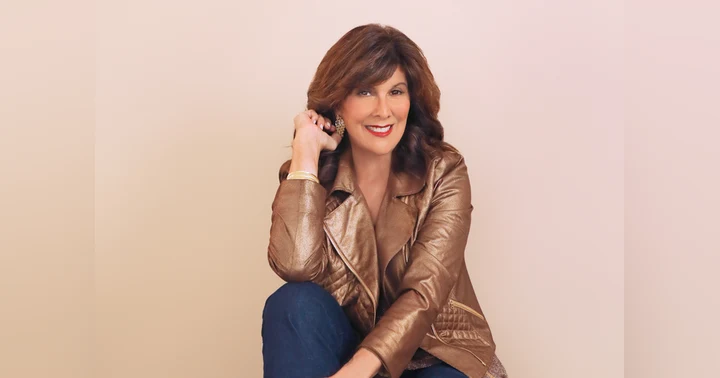
Hello everyone, thank you again for joining us on another episode of the Dorsey Ross show. Today our special guest is Rachel Keir Schneider, who is a author and a speaker who has experienced loss. Her first book, The Widow Jose Red, chronicles her granny with her husband, John, through his terminal diagnosis. She inspires others to face upbreak with honesty and hope. Widowed at 49 with teenage sons at 14 and 10, she then navigated the road of teen addiction, which is the basis of a soon-to-be-released powerful narrator with practical tools to help people rebuild their lives after loss. Her speaking events have become a space for inspiration, reflection, and empowerment. Her mission now is to help all of us keep putting the eye and spirit in ways that are healthy and holy. Rachel, thank you so much for coming on the show today.
SPEAKER_01Well, Dorsey, thank you so much. I'm excited to share some time with you and your audience.
SPEAKER_02So tell us a little bit, you know, about yourself and about your, you know, your background and your story.
SPEAKER_01Okay, well, that's a big ask, Dorsey. I don't know if we have I don't know if we have that kind of time. So I'll just give you the reader's digest version. How about that? Not that anybody even knows what reader's digest is anymore, right? But okay. Short form is um I grew up in a very faith-filled, fun family. There was always a lot going on. I'm the oldest of four. My mother was an immigrant from Ukraine. She was born in Kiev and came to this country at 14. She settled in Mississippi, and she actually had to pick cotton to pay off the passage that they had to get here from Germany. So my mom was an immigrant, my dad, a graduate of the Air Force Academy, and they are still alive, married, and in Melbourne, Australia, as we speak today. They are 87 years young, and I have to give them a lot of credit for me being the person that I am today. I have, as I said, I have a brother also in Australia, one in Florida, and a sister in North Carolina. So there was always a lot going on, and our family didn't really experience a lot of trauma or or heartbreak. I can't remember, you know, a lot of of tragedy. And so, but I do remember being in church a lot because my mom was brought up one way and my dad was brought up another way, and we were and we had to experience all of it. So I will tell you that my faith had kind of a different formation at a very, at a very early age. I got a lot of biblical knowledge. I knew the scriptures, I knew the stories, I knew all of those things. So I took off after high school, went to college, graduated, and settled here in Dallas, Texas. I started my own advertising agency and then went to work for a magazine. And that's how I met John. I met him through his mom, and that's actually the first the first sentence of the book says, I met Elaine, and I met her on a sales call, and the rest they say is history. She introduced me to her son John, and John and I fell in love, got married, and that's the first place he took me to was King of Prussia, Pennsylvania. And I have to tell you, Dorsey, because we were talking before, that's where you that's where you are, you know where it is.
SPEAKER_02I do.
SPEAKER_01Yeah, I will tell you. When he said King of Prussia, all I heard was that Prussia rhymes with Russia. So I thought we were going, I thought we were going to another country. And look, when you're raised in the South like I was to go to Philadelphia, you might as well be in another country, right? I mean, it's a different, it it's a whole, it's a whole different world. I w I'd never dealt with snow or ice or any of that stuff. So that's where we started, that's where we started our married life, and then subsequently went all over Seattle, San Francisco, back to Dallas, to Chicago, back to Dallas, then to we finally ended up in Minnesota, where he accepted one of the biggest his career pinnacle was with that position. And um, and that's where we settled, and our two boys were there, and life was good.
SPEAKER_02And you know, your background more is that your your husband got a diagnosis of an illness. Tell him about tell him about that and what was your first moment, you know, what we what was your first moment like with that?
SPEAKER_01Well, okay, I'll tell you. Since you asked Dorsey, I will tell you. My husband had always been an athlete in high school and in college, so he was used to getting those those kind of aches and things that happen that sometimes don't resolve themselves. And as we all get older, we know what that's like. And unbeknownst to me, he'd been seeing a neurologist for about a year because his left foot was just not working right. It was it was starting to drop. And so he, his doctor, the neurologist, knew he had an appointment coming up at the Mayo Clinic, which is based in Rochester, Minnesota, a couple hours from our house. And he gave him the file and he said, I want you to take this with you when you go to see the doctor for your executive physical. And so John headed to Mayo and he called me that day and said, later that afternoon, and said, I'm coming back home. I want you to go with me. They want you to be here tomorrow. And I thought, okay, that's weird. You know, he said, make arrangements for the boys, but you've got to come back with me. So he came in that night, Dorsey. The kids were in bed, I was reading, and he looked as white as a ghost. And and my husband was not given to being overly dramatic. He he wasn't wired that way. And he came in and he said, uh, Rachel, they think I've got this disease. I'm gonna die. And I looked at him and I go, wait a second. And he was as white as a sheet. And I said, Hold on. He said, They think I've got ALS. And I go, what is that? He goes, Well, it's Lou Gehrig's disease. And I go, well, I don't know what that is either. What are you talking about? Just calm down for a minute. And yet I could I could sense that he was, he was, he was terrified. And and I said, I said, you know what, John, it's been a long day. We'll go tomorrow, you know. And I'm thinking to myself, we're gonna get this all straightened out. I'm sure these doctors got it wrong. This can't be right. And plus, we live in America, Dorsey. Anything is possible, right? This can't be, can't be true. That there's anyway. So we went back to Mayo the next day, and that is where, after a couple of days of testing, they did confirm this diagnosis. And if you haven't heard of ALS, that's okay. It's still a relatively rare disease. There are about 30,000 people a year that have it, and between five and six thousand a year are diagnosed with it. And most recently, you and your listeners may know that Eric Dane, the star who was on Gray's Anatomy, young, young actor, very good looking, just died several weeks ago of this same tragic disease at the young age of 53. So it's been around for over 150 years, but we're no closer, Dorsey, to knowing what causes it or to having a cure. And that is very, very frustrating uh for me. Um, and yet uh my my prayer and my hope is to encourage people who are going through whatever trial they may be, that that you know, your faith can get you through this and there is joy along the journey.
SPEAKER_02What was your faith like doing that language?
SPEAKER_01Well, I thought that I had a pretty I thought that I had a pretty firm foundation, and and what happened for me is that I realized that it was not about religion per se, but it was about a relationship. Jesus became as real to me as is you on the other side of this screen. I talked to him, I cried to him, I questioned him. I just really realized that I had didn't have the answers. I had no idea how we were gonna get through this. I had never envisioned my life with this situation, and yet I knew I I also knew that, you know, God can heal us of anything at any time, Dorsey, if he chooses to. And I think I just held on to that. And about two years into the diagnosis, I had to realize that the story was not gonna turn out the way that I thought that it would. And I think that was the moment that I just said, Okay, Lord, you have to help me get through this and help me help John finish well.
SPEAKER_02How long you don't mind me asking, how long did he live with ALS for?
SPEAKER_01Good question. The typical, when they give you the diagnosis, Dorsey, it's anywhere from two to five years. John, um, because what ultimately John had three years, and what ultimately happens is because the body self-paralyzes, so the motor neurons which carry the messages from the brain to the muscles, they die. So your body, imagine having an itch at the end of your nose, and you can't lift your arm to get your finger to the edge of your nose to scratch it, and yet your mind knows the whole time I've got this itch and I want to scratch it. So, in that regard, it it is brutal. And basically, ultimately, what happens is because your diaphragm, which moves your muscle, your lung muscle, it's a muscle that moves the lungs to breathe, it stops working. And so ultimately what happens is that most patients just suffocate. But they get, you know, a lot of people get a breathing tube, a lot of people get a feeding tube. You can go on for a while. It just depends on how you define your quality of life and what you and your family decide how you want to, how you want to go on with this disease.
SPEAKER_02Yeah. Now I know you wrote a book as well, and it's called Widow Ware Red. And it's because you and you at your at your husband's funeral, you wore a red dress to that funeral. Tell us why you did that.
SPEAKER_01Well, I will tell you that it was it was a decision that I made because you know, John's been gone for 14 years. And, you know, basically the term celebration of life is relatively new in our culture. And now, you know, a lot of people know about it and recognize it. But 15, 14 years ago, people were still doing funerals and memorial services and very heavy and very somber. And because my boys were so young and I knew we were going to have so many kids at this event, I really wanted to make sure that it really focused on the legacy of what John left behind rather than the brutal way in which he left this earth. So me wearing red was an intentional decision to celebrate our love. Red is the color of love, it's the color of passion, and it's also the color of fire. And the Holy Spirit is denoted as a flame in the Bible, in the book of Acts, in Pentecost. And so I really wanted people to understand that yes, we were all sad about John going, but he was going home. He was he was going to heaven, and he and so we needed to celebrate that fact and then also all of the good that he brought into the world and the legacy that he was leaving in his two boys.
SPEAKER_02What unseen small beginnings prepare you for young diagnosis?
SPEAKER_01Hmm. You know, I don't know that I don't know that any of us are really prepared to get news that changes our changes our life so dramatically. I will tell you that we were probably in in shock for a while. We did not, we did not tell our family right away. We waited several weeks to do that. My husband was also let go from his job within three weeks of this diagnosis. So I felt like, oh no, the truck ran over us and then it backed up to make sure that we were really, that we were really done. Because that was that was just, I think for my husband, that was in some ways more difficult than the diet than the diagnosis, at least early on. We waited Dorsey for a whole year to tell our boys because what we realized is that, you know, John to look at him at that point when he was first diagnosed, he he looked he looked fine. You had to really look closely to see that maybe his walk was off just a little bit. But what we knew is that it the minute that we told our kids, the rest of the world neighborhood would be finding out. And we needed some time to be able to fortify ourselves as to how we were going to be able to do that. So I remember about a year later, John, it was clear something was wrong with dad. The boys were realizing it, people were understanding something was wrong with John. And so we decided it was time to tell them. And I remember we we walked them into the family room, we sat them down, and I said, you know, dad, daddy is sick, and we need to tell you a little bit about what's going on with him. He has a disease, you know, called ALS, and his muscles are going to get weaker and it's gonna become harder for him to to walk and to talk and to do things. And my youngest son, Jake, asked and said, Is dad gonna is daddy gonna be in a wheelchair? And I said, Yes, he will be in a wheelchair. And then he said, Is daddy gonna get out of the wheelchair? And I said, Probably not. And then he looked at me and asked the the hardest question of all, and he said, Is daddy gonna get better? You know, Dorsey, we're always told not to lie to our children. We don't want our children to lie to us. And so in that moment, I also realized that I didn't need to, you know, throw up on them and tell them everything that I'd heard about this terrible disease. So I just said, you know, boys, we we are going to say our prayers every night that God will make daddy better and that we'll heal him from this disease. And in the meantime, we're gonna take really good care of him as best as we can. And, you know, with that, we left it. The boys headed out to meet their friends, and then within 10 minutes, my phone started, you know. Rachel, John just told Sam, your husband has this thing called ALS. Can this be real? And then it was, you know, they say that good news travels fast, but bad news travels faster. That's kind of what was happening. And so we were just hit with this tsunami of support, but we found ourselves actually comforting our friends and our neighbors because because they were now going through the shock that that we had been through, you know, a year ago.
SPEAKER_02How did you wrong a care caregiver develop? And what was the biggest surprise?
SPEAKER_01Well, the biggest surprise was that I never thought of myself as a caregiver. If you told me that I was gonna be a caregiver, I would have said uh no way. And I think that's that's probably not unusual because you know, unless you unless you've always known that you want to be a nurse or be in the medical profession or so on, I just didn't see myself as being that type of person. I didn't think I had the patience for it. I certainly didn't have a skill set for it. And I will tell you that my husband, there were moments when he would look at me like, you're gonna do what? You're gonna move me from here to there, or you're gonna put this tube down my throat and suction this stuff out of me. And I gotta tell you, learning the equipment, the breathing machine, the suction, all of the the hoyer lift to move them, the wheelchairs, the electric wheelchair. It is you're just inundated with with all of this equipment. And I know that for a lot of caregivers, it's like not only the medication, but the equipment and then the schedule. And then you have people coming into your house, you know, if you're if you're getting home care or if you're on hospice. And so I will tell you, Dorsey, that it really, it really affected me in the way that I became much gentler. I became more patient, developed more compassion. You know, if you're not used to taking somebody out in a wheelchair, you realize very quickly how difficult things can be. It made me so much more aware of how people have to operate in this world uh when they have um less than a hundred percent capacity. It's a challenge and it's exhausting. And I just have such empathy now for people who are who are taking care of a loved one. I will tell you too that what I know is that it is the greatest act of love that you can provide because you are there to serve and to love and to provide. And yet it's also so important that you make sure that you take care of yourself. And I think sometimes that's the that's probably the biggest challenge for caregivers because statistically, it's not unusual for a caregiver to die before the person that they're taking care of because the load can be so great. So I was really fortunate to have a tribe of friends who could who could who could read me and look into my situation and say, Rachel, it's time for a timeout. We'll come sit with John, let's take you out for a walk or some lunch or a coffee, let's let's just get you out of this moment for a little bit just to renew and refresh. And I do believe that for caregivers, it's the consistent routine of the tasks that are involved that sometimes are the things that just you just everybody needs a break. Everybody needs a breaks. The biggest surprise was that I was able to do it.
SPEAKER_00Didn't hurt I didn't hurt my husband, I didn't make it worse in the process, Dorsey. I was able to do it.
SPEAKER_01But wow, I will tell you, I didn't think there would come a time when I would be able to ever sleep through the night again. I just I didn't think I'd be able to do that.
SPEAKER_02I can relate as far as the as far as the car can go because I did that for my dad for the last, you know, couple of years. You know, like you said, we had to have the the nook the home health age come in and you know eventually we had to have the you know the the d the decision to make to m be made to get either um you know hospice to come in and you know have all that have all that all that, you know, wait on me and everything. So it was good to have the home health age that way I was able to go out, go to work, you know, go to search because they had to and think of the think Yes.
SPEAKER_01And you know, the thing too, Dorsey, is that a lot of people don't get they don't utilize hospice the way that they should, right? A lot of people wait until it's too late. I mean, hospice offers so much to those of us that are that are caring for someone. And I remember the doctor in May told John and me that John would not make it through the end of the year. Okay, that's okay, that takes a minute. And then he said, I'm going to write the orders for hospice today, and you guys can, you know, choose to execute them, you know, whenever. And I remember my husband was like, Well, I'm not, I'm not doing that, you know, because a lot of people think hospice is, you know, the bed in the corner and a morphine drip, right? And that's the end. And yet I looked at John and I said, honey, this will make this is gonna make life easier because we will have somebody that can come in and help me bathe you and help me do these things that I'm doing right now. It would take me three hours, Dorsey. You probably know. It would take hours to get the the the laundry room set up, converted into a place where I could shower him in the plastic wheelchair and get it heated and do the it was exhausting. So I do, I do think that there, you know, there are conversations that people need to have sooner than later because hospice can offer so much more, I think, and we are just we just don't we don't utilize it, I think, the best way that we can.
SPEAKER_02Yeah. Well was there any particular conversations you had with your husband that still keep your life today?
SPEAKER_01I had a few of them actually, and I think that's the thing about difficult conversations is that sometimes you have to have them more than once. And so there were several that John and I would have, and yet I also know, Dorsey, that he part of this process was that if I asked him about, you know, how do you want to be remembered? Or do you want me to go plant a tree in your honor somewhere, or do a bench by the lake, which he loved, or you know, what how he he could never, he just he would get so emotional he just couldn't talk about it, right? And and I would come back to it and come back to it, but I never, you know, I I I wish that he'd been able to accept it, but I also understand that a lot of people feel like the minute that I admit that this disease is going to kill me, that they've given in to something. something or that they've acknowledged that they're not fighting anymore. And that's not, I don't think that's necessarily the case. I think acceptance is a huge part of of this process. But one of the other, you know, conversations that John and I had was about, you know, me going on without him, you know, whether or not how he felt about if I ever got married again, if how he felt about that. And I remember him, all he said was that Rachel, I just want you, I just want you to be happy. Whatever, whatever that looks like, I just want you to be happy. And, you know, I remember one conversation we had, I looked at him and I said, you know, I said, I'm a little bit jealous of you, John. And he looked at me like, why in the world would you be jealous of me? And I said, you are actually going to get to meet Jesus a lot sooner than I am. And he just rolled his eyes like, okay, that sounded absolutely foreign to him. But I said, you know, I'm I'm the one that's always talking to him. I'm the one that's always talking about him. And you're going to be the one that goes to meet him before me. So I think that, you know, he and I, our ability to have the hard conversations, our communication skills got much better. Dorsey, I went and started seeing a therapist, a faith-based therapist, because I really wanted to help my husband finish well. And I knew that I had never helped anybody die before. And I knew that I needed some some strategies for that. And I remember one day I walked in, I was so worn out and agitated and just just cranky. And I said to her, I said, I don't understand this. I have faith. I know who's in charge. I love Jesus. Why is this so hard for me still? I don't understand this. Shouldn't my faith be making this easier? And she looked at me and a big smile came across her face and she goes, Rachel, she goes, Jesus was a guy. I said yes. She said he had 12 guys helping him. And I looked at her and she said you know you're not Jesus and you might need some help. And I think at that moment Dorsey I realized okay I I do need to acknowledge that I can't do this. I know spiritually I can't do this on my own, but physically I need to let people help me. And I may not even yeah I may not even know what kind of help I need at the moment but I need to be ready willing and able to accept whatever help people can give me in whatever shape or form that might look like. Yeah that was a huge lesson for me.
SPEAKER_02What prompted you to write your book?
SPEAKER_01Well I will tell you that years ago I was at a retreat and they handed out a workbook and it was the first question was what is your what is your life's purpose? And immediately the thought came to me I wanted to write a I wanted to write three books and I wanted to speak to audiences and fortify their faith and that just came right out. I didn't even have to hardly think about it. I knew as I was going through this experience that this was a story that needed to be told because I couldn't find anybody else that was going through it. So I knew that I needed to share it and I knew that I needed to to provide some hope and some inspiration. So the the first book The Widow chose read My Journey with Jesus John and ALS is the first part of a trilogy I'm in the middle of writing the second book now The Boys, the Bible and the battles and that will talk about my being widowed at 49 and raising these boys and how one of my the oldest went took this took this road down addiction his grief and his hurt was so traumatic that's how he chose to handle it. And so that will be released on on Father's day of this year and it will have the perspective of both of my sons in it which I'm very very excited about. And then the third book will be released probably within the next year after and it's about God the guy and the girls because I met a widower who had four girls his wife died six months after my husband did and we dated long distance for 10 years and waited while all of these kids grew up and graduated high school and then we went and got married three years ago in Israel at the Sea of Galilee. Wow how is this son doing now? My sons are terrific thank you for asking they are now the oldest John is 29. He has been clean and sober since he was 22 so that's seven years. He is a father so that makes me a yah ya and he's engaged. So he has a great job and he lives about an hour from me so I see him on a regular basis. And my other son Jake my youngest is in Chicago he's working for a sports marketing firm and he is doing great too. I I do know Dorsey that you know childhood trauma is real. I know that now there are so many more resources for helping young people who are going through traumatic events. And you know we have so much more of a mental awareness than we did about mental health 14 or 15 years ago. So I'm very very thankful for that. Kevin my husband his four girls have all have all you know suffered through the loss of their mom but they are all you know working and graduating college and so there is there is light at the end of the tunnel but I will tell you that sometimes it feels still sometimes we do. We we will always pray for our children and and hope that the light continues to shine in their lives.
SPEAKER_02Yeah. I just had an interesting question if you don't mind me asking it. Can you with your now husband that you um dated or you know dated for 10 years before you got married. Yes. What made and I know you said that you wanted to wait until your kid got older yes but what after that time what made you still want to get married?
SPEAKER_01Was it that you I was showing love or yeah we so we we were long distance in that I met him when I was in Minneapolis. He was living in Omaha he took a job in West Palm Beach, Florida and I moved to Dallas uh so that Jake could play football, um, high school football. And so Kevin and I I think realized that our children one of the things that they were most afraid of for the first couple of years was that their other something could happen to their other parent. I mean they were all really young when they lost you know their dad or their mom and so there was a real fear that something could happen to their other parent. And Kevin and I both realized too that these these kids deserved to to be the priority. So we we would go for months without seeing each other we you know we just really had to to make a commitment I believe that what happened Dorsey is that we let these kids grow up they understood they were important they understood also that Kevin and I you know we're having had this relationship but we really wanted them to realize that they were that they were the priority and so after the twin girls graduated high school we got engaged for four years. And so we knew that we were headed in this direction which was also very important because I think too there comes a time when you have to you have to decide right we're either moving forward or we're not and it's interesting because that had happened with my relationship with John because John had moved already to King of Prussia Pennsylvania and I was still in Dallas and we've had been dating long distance for over a year. And finally I said okay we have to make a decision are we going forward or not? I do think that Kevin and I you know we were committed and it was the right thing to do for for our kids. They are all now young adults they are all living their their lives and when we get together you know people say oh Rachel it sounds like the Brady Bunch and I'm like okay the Brady Bunch the Brady Bunch only existed on TV and it wasn't real. We are not there is no there is no real Brady Bunch. It's still you know but these kids respect each other they understand the relationship that their dad and I have and I do believe that we have modeled a a healthy a healthy loving relationship for them as they go forward and look for their life partners too.
SPEAKER_02Yeah we didn't get rid of the closure or we like to ask my guests what what what one word of encouragement that you would like to give to my audience that might be facing you know someone with an illness someone you know or maybe down the road they may get a diagnosis.
SPEAKER_01Well I would first of all encourage you to pursue to pursue your a belief system mine is Christian mine is you know my faith is is key I would be in a fetal position if I if I didn't have it. I also think it's really and you need to fortify yourself with that before the thing happens because here's what we know Dorsey change is going to come into our life things are going to happen. We were never we were never promised a life without some challenges and some difficulties and curveballs are thrown to us all the time. So I want you to be able to stir up that supernatural superpower that's inside of you known as the Holy Spirit which was left with us as an advocate and as a comforter as and and some of us may think of it as that still small voice that we hear that it that little intuition that prompts you and guides you. But I know that in those moments of sheer desperation I I just call out and say please please Lord help me Holy Spirit pray for me I don't even know what to say but all of us may not get that happily ever after that we thought we would but I do know that we can live a life that is hopefully ever after and that can be even more abundant than we ever thought. Amen well Schneider thank you so much for coming on the show today we greatly appreciate having you well Dorsey thank you and if any of your listeners are interested my book is available on Amazon. Also um I recorded it on Audible it's about five and a half hours and uh they can connect with me through my website which is Spirited Prosperity or find me on Facebook or LinkedIn or uh YouTube or Instagram.
SPEAKER_02Guys and girls thank you so much for coming on and for listening today and please go and check out Rachel's website and her book and please go and share this episode with others and until next time God bless bye bye