


 Apple Podcasts

 Spotify

 Deezer

 iHeartRadio

 Goodpods
Let me know what you think of this episode?
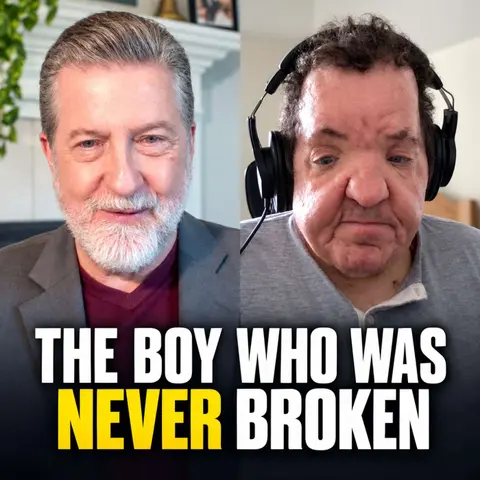
Some stories don’t just inspire - they rewrite how you see dignity, disability, and what a full life can look like. Dr. Stuart D. Jones shares the unforgettable story behind For the Love of Stephen and the brother who was never broken, even when the world treated him that way.Dr. Jones is an award-winning author, retired higher education leader, former pastor, and disability advocate whose life has been shaped by ministry, family, and a deep commitment to human worth. In this conversation, he opens up about growing up with his brother Steven in an era when children with intellectual and developmental disabilities were often hidden away, mislabeled, or told they could never thrive.You’ll discover how Dr. Jones’s parents refused institutionalization, chose love over fear, and helped Steven build a life that defied every low expectation. He shares the turning-point moment that changed his family’s outlook, the role of faith in reshaping his theology, and why Psalm 139:14 - “fearfully and wonderfully made” - became more than a verse. It became a lens for seeing every person as someone created with purpose.We also break down what real inclusion should look like in churches, schools, and workplaces, why pity can be as harmful as prejudice, and how too many people still underestimate those with disabilities before they ever get a chance to show their gifts. From a 33-year job in housekeeping to a high school diploma, a bowling league captaincy, and an astonishing chess talent, Steven’s life is a powerful reminder that capability is often overlooked, not absent.This episode matters because the way we treat the most vulnerable says everything about who we are. If you care about disability inclusion, faith in action, family resilience, or learning how to replace judgment with compassion, this conversation will stay with you long after it ends.Perfect for listeners who want an honest, moving, and practical conversation about advocacy, faith, and the power of seeing people as fully human.
Want to be a financial supporter of the show, click here,
https://www.buzzsprout.com/1754677/supporters/new
Follow and subscribe to the podcast here, and get weekly updates on when new episodes are released.
https://podcasts.apple.com/us/podcast/dorsey-ross-show/id1495921329
Social Media Links,
Instagram
https://www.instagram.com/dorsey.ross/
Facebook
https://www.facebook.com/DROCKROSS/
My Book
Amazon Book Overcomer
https://bit.ly/4h7NGIP
Want to be a guest on Dorsey Ross Show? Send Dorsey Ross a message on PodMatch, here:
https://www.podmatch.com/hostdetailpreview/1615423845838x127949785844303500
Affiliate Link For Podmatch
https://www.joinpodmatch.com/dorseyross
Thank You for Listening, I hope you enjoyed this episode and that it encouraged you. Please like, share, and leave a review.
Welcome to the Dorsey Rod Show, where real faith makes real stories. Hosted by Dorsey Rod, here we sharing writing an inspiring story. And today we are diving into another incredible testimony of overcoming child and experiencing the faithfulness of God. Whether you're facing your own battles or just need some encouragement, you're in the right place. So let's get started. Because your story matters, and God's grace is bigger than any obstacle.
SPEAKER_01My parents in the early days of Steve, when he was one, two, three years old, again, they heard every negative diagnosis and prognosis that everybody gave them. You know, Steve's probably, you know, never going to be able to have a job or be productive or speak, or if he walks, that'll be a miracle, blah, blah, blah. My parents kind of bought into the doom and gloom of what experts might tell them because they didn't know any better, right?
SPEAKER_02Hello everyone. Thank you again for joining us on another episode of the Door To Us. So on today's episode, we have Dr. Stuart D. Jones, award-winning author, retired higher education leader, former pastor, and passionate advocate for disability, including Stuart at Claims, a memoir for the Love of Stephen, the story of a boy who was never broken, tells the powerful true story of his brother's life and a family journey of love, dignity, and resilience with a PhD in higher education, leadership, and over 30 years of experience driving student success across the country. Stuart brings both heart and heart-earned wisdom every conversation. Stuart, thank you so much for coming on the show today.
SPEAKER_01Dorsey, thank you. And I mean that sincerely, given that you and I are kindred spirits in many regards. Thank you. This is this is an honor. And what an amazing introduction. With an introduction like that, I have nowhere to go but down. This is only going to go down from here because you really built me up to be somebody amazing. And I'm not sure that I am, but thank you.
SPEAKER_02You know, could tell us a little bit more, you know, about your your background and about who you are.
SPEAKER_01Yeah, happy to do that. I'm a blessed individual. I'm blessed beyond measure, and I don't deserve it. I've I've had a wonderful career in ministry. Even though I started as a minister after getting my master's degree in theology and divinity, now that I'm retired, I've kind of come full circle. I'm doing ministry again and filling in for churches who may be uh missing a pastor, pastor's gone, or pastor's just on vacation. Uh, but I spent a wonderful career also in higher education, which is a ministry in and of itself, as we, you know, work with students at colleges and universities to help them further their goals and their dreams as well. But in retirement, Dorsey, I finally did something I've wanted to do for at least 15 years, maybe as many as 20. And that's tell the story of my brother Stephen, who was born with intellectual and developmental disabilities in a time when they were either hidden away by putting being put in institutions or their parents were embarrassed by them. And Steve took a pioneer, my brother Stephen took a pioneering journey along with my parents to fight for disability dignity, to be seen, to be given opportunities, to be fully human and make sure the world sees them as fully human beings, created in the image of God, someone to be respected and loved and given opportunities to. So that's kind of been my lifelong journey. Along the way, I found an amazing woman, got married, had kids, have grandkids. I've got five granddaughters, so I'm forming a girls' basketball team with my granddaughters. So I'm just really living a blessed life. And I appreciate this blessing of being with you here today. I really do. Thank you again.
SPEAKER_02You know, as you said, how how old and we won't get into the story of Steven and who Stephen was, but how old was Steven when he was born?
SPEAKER_01Yeah. Steve was born in an era that seems like a long time ago, 1954. And that's an important, you know, date, I guess, an era to understand, because back then, when parents gave birth to a child with special needs, there were no resources, there were no services, there were no clinicians to help you, doctors to advise you in regards to the special needs of your child. There was no special education, no individualized education plan for kids. So, again, what my parents were advised to do is put him in an institution, and they said no to that advice immediately. Immediately they did. Now, my parents didn't realize, I mean, Steve was not Down syndrome. It wasn't uh physically apparent at first that he may have a disability. But as he did not develop as a young baby and a toddler, my parents said, What's going on? He's not rolling over, crawling, speaking at all. What's happening? And they took him to a family doctor who said, and please forgive the terminology, but the terms back then were your child's mentally retarded. He's he's gonna forever be slow. And those were, even though we hate those terms today, they were nicer terms than what took place decades and maybe a century ago when children with intellectual disabilities were labeled imbeciles or morons, or they were defective. Just Dorsey, those were medical terms that they used, if you can believe it. Now we use them as derogatory, stigmatizing terms. But Steve was born in an unusual era. And what's remarkable about his life, Dorsey, he just was an ordinary guy, but he represents millions of people during a time when things were not provided for people and parents who had a disabled child. They had my parents had to take a pioneering journey of making sure the world would see Stephen, recognize him, give him the opportunities that most neurotypical children would be given. And that was sometimes a journey fraught with problems and challenges and barriers. But my parents, my gosh, I didn't realize how remarkable my parents were until I wrote the story. And I realized, my gosh, they were brave. And love is what drove them. Pure love. And so that's what makes Stephen kind of remarkable. The things that he accomplished that no one said he could accomplish, Stephen worked hard and he did accomplish. And I know you relate to that, Dorsey. You've been underestimated, and most people are who have challenges. Underestimated, overlooked, not respected, and yet you're capable of so so much that people don't even realize.
SPEAKER_02I can relate a little bit to what you said there, because my parents, when I was born, I was born in 1977. You know, a lot some people think because the way I look and I look younger than I am, but I'm actually I'm not. I'm 49 now. You know, you know, touch a little bit on what you said there, with your parents, you know, the doctors, you know, eventually telling them, hey, you know, he'll probably be retarded, he'll probably be in the institution and whatnot. My parents would tell the same thing. Maybe not, maybe not the retarded part, but about, you know, hey, you know, we think he'll be you could put him into an institution because he'll he'll eventually become blinked.
SPEAKER_01Mm-hmm. Yeah, yeah. And parents, bless their hearts. Uh, I'm not faulting any parent who has done that or has to do that because they have no other alternative. Sometimes there are severe disabilities that people just simply cannot manage in a home environment. But my parents just simply refused. My parents were 18 years old, straight out of high school. Mom's expecting a baby, dad's freaking out, they go to the altar and get married, and then their very, very first child was a preemie, and he was born with special needs. You know, they were as poor as church mice, my parents. And then dad got drafted into the army, and they drug poor Stephen all the way down to North Carolina for a couple years so dad could serve in the military. It just was a really interesting story of overcoming challenges. And eventually, belief in God sustained them. It didn't not, that was faith was not a strong part of their life at first, but it became so. And Stephen was given many opportunities thanks to the resilience and stubbornness of my parents who said, We are not ashamed of him. We are not hiding him in our house. We are going to put him out in the public. He's going to join Boy Scouts, and he did a neurotypical Boy Scout troop. Imagine their reaction. He's going to be in 4-H with other, you know, quote, normal kids. He's going to go to church. He's going to be in the choir, and he sang terribly. So he didn't. Choir didn't, you know, not everybody can sing. Has nothing to do with a disability. Yeah, he made a joyful noise, but only one God could understand. You know, choir didn't last very long. But Steve, Steve had confidence because my parents taught him to believe in himself and to give everything a try. I grew up with that blessing of a brother, and I didn't even recognize that he had challenges until I got older and realized, okay, he does have some challenges. And unfortunately, Dorsey, I recognize it because of the way society and people reacted to Steve. He looked different, he sounded different, his motor skills were different. And I saw sometimes the cruelty of the way people would look at him or stare at him or be afraid of him. And I saw the cruelty, and so did my other siblings when people literally picked on him, mocked him to his face, or physically would try to assault him because he was an easy target in their mind. So I saw some of that. And I became a I went into defense mode as the younger brother, and so did my other brother and sister. We we felt growing up with Steve, we had to protect him. We wanted to show Steve to the world, of course, so that he would enjoy life. But we also at the same time had our guard up and our antenna up for those that wanted to hurt him emotionally or physically. So it was it was a good life growing up with Stephen, and it made me far more compassionate. Steve taught us so many things about compassion and loving unconditionally and befriending everybody and having no prejudice. You know, I learned a lot from my older brother, uh, and I'm blessed because of that.
SPEAKER_02Well, you know, you were saying in there about your brother being picked on and, you know, teased and mocked and everything. Could he not speak? What was his limitation as far as his disability?
SPEAKER_01Yeah. Uh he was given the diagnosis. Again, back in the 50s, it was more theory than real science, still, you know. But he my parents were told there's a lot of things he can't do, but he did speak. He spoke with a stutter. It was sometimes it was hard to understand his particular cadence, his linguistical cadence, but we could understand it because we live with him every day. We understood what he was saying. And sometimes he spoke very clearly when he was mad, and he used words that made my mother blush. So, but Steve could speak, he could reason. His IQ was around, if you want to put it on a chart, it was I compared him to Forrest Gump in the book. It was around 65. You know, he, as my mother said, he had a beautiful spirit and forever the mind of a child. And his motor skills weren't perfect, he wasn't terribly coordinated, but that didn't stop him from wanting to play basketball with me and Scott and to try playing volleyball. He eventually loved bowling. He had a weird style of bowling, but it worked. I mean, he was still he would hit the pins and he joined a bowling league, and one year the bowling league made him the captain of their team. And so, you know, Steve liked trying everything, you know, and if he couldn't do it, he would try harder, and sometimes he'd get frustrated. But if I can tell you a really quick story that I think will mean a lot to your listeners. My parents in the early days of Steve, when he was one, two, three years old, again, they heard every negative diagnosis and prognosis that everybody gave them. You know, Steve's probably, you know, never going to be able to have a job or be productive or speak, or if he walks, that'll be a miracle, blah, blah, blah. My parents kind of bought into the doom and gloom of what experts might tell them because they didn't know any better, right? But it was one beautiful, momentous day where my aunt, my aunt Betty, had Steven out in the driveway of the house where they lived, and she was trying to teach Stephen how to move his legs and feet to pedal a tricycle. And according to my parents, Betty worked with him persistently every day for many, many days into weeks. Finally, one day, Steve got it. He understood how to make his legs and feet move and pedal them. And my parents came out of the house because Betty's screaming at them. And my parents come out watching Steve pedal for the first time. Mom cried, dad acted like he'd just won the Tour de France or something. But it was a joyful moment. And here's why it was an important pivotal moment. Because my parents said from that day on, they bought into a new philosophy. If Steve can do this, and people said he probably couldn't. If he can, what else can he do? So they adopted a positive mindset of let's raise our child like we would any child. And they did. Steve was never treated differently than the rest of us. And they said, let's see what Steve can do. And forget the doctors, the experts, the books, forget it. Let's see what Steve can do. And that made all the difference in giving him a full enriched life to be who he wanted to try to be and could be and and was.
SPEAKER_02Yeah, you can't you your parents kind of looks like my parents did. Good. Where they where they said, hey, you know, we'll we'll allow him to figure out for himself what he can and can't do and you know, whatever that is, and he'll he'll figure that out for him for himself. You know, just like you're like you said with your with your brother bowling, you know, I have fingers, you know, my fingers are not fully right. So I I go into bowling league and I had to figure it out that I could not put my hand into the fingers into the bone bowl and put it into the back because I had to put the balloon bowl in on the cup of my hand and roll it, roll it down fully the lean that way.
SPEAKER_01Yeah. But see, you did it, and you adapted and overcame, and that's that's why your story is absolutely remarkable, and Steve's too, because Steve did go to school. Eventually, they developed a special education program after he had been in school for quite some time. And eventually, Steve did get an education, and the proudest moment of my parents' life was Steve graduating from high school. He learned to read. He wasn't a great proficient reader. That's okay. He learned his alphabet, it took time. He learned to count, he learned numbers, he learned to read, and he did well enough to actually get a real high school diploma. And he was among the first special education students to be integrated when he was 16 years old into a public school. And the school resisted that for years and years. Students who were special ed designated were in separate schools. They were segregated. People didn't want to deal with them, they certainly didn't want to see them. But Steve eventually was part of a core class that got in and was integrated for the first time into public school. And he graduated from a public school, Jefferson High School in good old Lafayette, Indiana. And it was a beautiful moment. And he didn't realize he was breaking through a wall and a glass ceiling and being a pioneer, all those cliches, but he was, and he did it. And now we it's commonplace to see special ed students in public schools. They're integrated for the most part. Uh they're integrated sometimes into core education classes. It's a beautiful thing. And I'm glad to see that has happened. Steve was one of the first in his little corner of the world to make that happen.
SPEAKER_02Before he went to public school, was he in a school for people with disabilities?
SPEAKER_01No, my parents couldn't find anything. My parents were raising him in a small little USA town, one of those beautiful little towns that's got like, you know, 200 people in it, maybe a little bit more than that. They took him to kindergarten for neurotypical kids. Steve was neurodivergent, obviously, but he went to a typical kindergarten class and he he didn't pass. The teacher was a beautiful woman, a beautiful soul, Mrs. Kendall. But she told my parents, well, Steve can't tie shoes yet. He he doesn't know his shapes, his colors, his numbers, his alphabet. So Steve repeated kindergarten. And then after a second year of kindergarten, she said, Steve's not ready for first grade. Let's do a third year. And my parents said, No, thank you. There's gotta be a better solution. And they read about and heard about in a neighboring, much bigger city of Lafayette, Indiana, than their small town. They heard of Purdue University and a guy named Dr. Gephardt, who was a professor, who was working for the first time with special needs students and was educating Purdue University students to work with special needs students. And my parents jumped on that opportunity. They couldn't get him in at first because so many other parents jumped in on that opportunity quickly. And his cap limit of 70 kids was filled just like that. So my parents took him in Latvia to a place called Wabash Center that they had heard about, that Dr. Geppard had recommended. And it had no teacher, it had parents. It was a group of parents who were tired of their children being ignored educationally and said, I believe our children can learn. So they started a pseudo special education center where you threw all these kids, regardless of their ability and age, you threw them into one big classroom where volunteers were trying to help them learn. And by the time Steve got to the age of 10 or 11, finally my parents and the other parents heard about Murdoch Elementary School hiring its first ever special education teacher, trained in working with neurodiverse children. Finally, but of course it was in a separate school. It wasn't in the same elementary, it was in a separate school. But Steve got to go. And finally, a trained person could work with Steve and other children on understanding their cognitive abilities and what can they do. And then Steve's education really began to happen. And he did learn his alphabet, learn to read, as I said. And he was given an educational opportunity that really paid off. Because of his high school diploma, he was able to get a job. Where again, people thought Steve will never be able to have a job. Are you kidding? Steve held the same job for 33 years before he died. 33 years at a hospital in housekeeping work. And he was proud of that job. And he did well. He did so well at that job. The supervisor used him to train the new employees in housekeeping. So these were things people said weren't possible for Stephen. And again, because of my persistent parents who loved him dearly, Stephen progressed and he did what he was capable of, and he grew as fully as he could. And he became an amazing person with a great sense of humor, loving, kind hearted, caring, caring to a fault, I'm afraid. The book does talk about unfortunate circumstances where people took advantage of Steve. There's two chapters called Vultures That Circle. And they circled Steve because sometimes mean spirited, unkind. People will spot someone who's vulnerable. Still happens today all the time. You know, with scammers and spammers, they will take advantage of vulnerable people. And Stephen was taken advantage of far too many times by people who meant him harm. And they did harm him. But you know, it was the journey Steve took, and he was resilient, and he never got calloused about people. He never held a grudge. He was never mean-spirited. He was kind to a fault. And poor Steve couldn't differentiate Dorsey between someone meaning well for him and someone who was conning him to take advantage. He couldn't discern those two. So he fell victim too many times to people who took advantage. So anyway, Steve's life was remarkable. But he represents, as I said, millions of people that we need to start seeing as fully human and that we need to love and give dignity to and include and include and allow them to belong. Because too many times they're stigmatized, they're segregated, and they're not uh given the dignity that they deserve.
SPEAKER_02When did you first first realize Stephen King's your theology?
SPEAKER_01We started attending church when I was 10 years old, and Steve was about 17. My father had a drinking problem that he was able to overcome. And my father knew that the only thing that could really fix his his shattered life, because he went through some tough times, and so did my mother. The book will kind of share more about that. But we decided, my father decided we're going to go to church. And I remember the Sunday morning that I was 10 years old, and Dad said, Hey, we're going to church today. And I and I said, What's church? What is church? What is that? So we started going to church, and Steve's faith was a beautiful thing to behold because he took church seriously when as he was taught, be kind ye one to another, you know, and and love God with all your heart, mind, soul, and strength. Steve took that seriously. And his faith was a serious thing to him. And it was to me, too. I'll tell you a very quick story that changed my thinking about my brother forever. You know, as you're growing up, you go through weird phases as a kid, right? You're self-conscious, you get weird. Every kid growing up goes through weird periods. And there were times when, you know, I just wasn't prepared, how my friends would react to Steve. I wasn't prepared. Sometimes it embarrassed me when people started making fun of my brother, or they called me, you know, retarded too. Your brother's retarded, you're retarded. It was tough sometimes to endure that. And so sometimes I didn't know how to handle the issue. One Sunday morning, Reverend Bruce Morgan at our church preached a beautiful sermon based on Psalm 139, verse 14, which forever changed my theology. I praise you because I am fearfully and wonderfully made. Your works are wonderful, and I know that full well, is the psalm. And as I listened to Bruce Morgan's sermon called God, Don't Make No Junk, I realized for the first time my brother Stephen is not somebody to explain or be embarrassed by. God made him for a purpose. He was fearfully and wonderfully made in the image of God for a purpose. And that was a beautiful moment for me in understanding how special Steve was. And from that day on, my theology changed about my brother and about persons with disabilities. So I am so grateful for Reverend Bruce Morgan, who did that. Not only for me, but for the entire congregation, as he addressed the issue of any person born or developing and throughout their life a disability. They are not to be ridiculed, they are not to be dismissed. They are fearfully, wonderfully made by God and dearly loved by God. And that was important to me. And it's a message, Dorsey, that I'm carrying forward. I've been able to preach in churches about that psalm and about my brother helping people recognize and understand. Any human being, any human being needs to be treated with dignity and respect, regardless of what we think or our preconceived judgments or biases or prejudices. And so I have kind of had to fight the good fight in that regard long after Stephen's passing to let people understand that individuals with disabilities are loved and created by God. And we may not understand all the reasons. Doesn't matter. You don't question the creator, you just adore the creator's creation.
SPEAKER_02And from what you see in your own ministry life and you know, your own pastoral life and everything, what do you think God can do better to help people and families with people with no diligence or other disabilities that come to the that that's Yeah?
SPEAKER_01I think preachers and ministers and churches need to adopt Psalm 139, verse 14, and they need to teach their congregation a human truth. And that is most humans, when they see someone with a disability, even a child with autism who acts, thinks, and responds differently, people either pity these individuals or they are fearful of them. Because as human beings, we have a problem. We're judgmental. And there's this intrinsic, innate thing within us that's called heuristics, where we look at somebody and we judge. So that's a problem we human beings have. We can judge them based on the color of their skin, their gender, how they look, how they act, what they say, what they wear. We are judgmental individuals. We are. We all do it. You can't deny it. All of us do it, including this guy right here, right? But where Christianity kicks in is the Christian has to then realize okay, I have to overcome my human nature and see this individual as someone God created and for whom Christ died and gave his life. And that makes this human being beautiful and special. I mean, just because you judge, you just have to recognize, and churches have to teach this. Okay, so you judged prematurely, but you got to get past the cover of the book and see the beauty inside of the cover of the book, right? And that's where Christians have to allow their spiritual side, the Holy Spirit within them, if they're believers in Christ, to allow the Holy Spirit to move them beyond judgments and to see a beautiful creation of God. And churches don't always do that well, Dorsey. Steve had his feelings hurt in churches. The book describes a couple unfortunate situations, but it also describes some beautiful situations of Steve in church, where other people became his champion, where people lifted him up, accepted him, loved him, you know. And there's some tough stories. All of us Christians are human, and the ability to sometimes get past our own wrongful, sinful humanity and get to a place to see people where Jesus would have seen them and responded to them. We have to be Christ-like in our response toward all people. And I never saw Jesus turn anybody away and reject anybody. He loved all because God loves all. And so we got to get to that point too. Churches have to teach this. And I don't hear enough churches teaching about that particular topic. I really don't. Probably because it's going to step on people's toes. Probably because every person sitting in that pew is going to have to look at themselves and say, okay, what are my prejudices? I don't have to share them today, but what are my prejudices? You know, who do I discriminate against? Why am I afraid to approach a person with a disability? Why don't I befriend a Hispanic person, a black person, a Latinx person, an Asian person? Why? Why am I afraid of people who are gay? Why do I put down another gender? Why? Why am I this way? And how can I overcome it and be more Christ-like in the way I treat other people? I need churches to preach that. I really do. And I'm preaching it now, and you didn't even ask for a sermon or something.
SPEAKER_02Sorry. You mentioned earlier that your family lived in a small town of 200 people. What was there a skeptic like to your parents and to Stephen?
SPEAKER_01Yeah, I think my parents would say, uh, and this is not going to surprise you, there were people in the town that just kind of kept their distance. Fear and ignorance can rule how people respond. And there were other beautiful people, and there still are in the same town that as Steve was growing up who accepted him, loved him, weren't afraid of him, didn't pity him. Steve didn't want pity. He just wanted to belong, right? I don't know of any disabled person who wants you to feel sorry and pity them. No, they just want to be a part of everything that's going on and be respected. You know, they want to be a part, belong, be included. So I think there were people in the town that absolutely, and you're going to find that anywhere, people that steered clear, no, thank you. I'm not comfortable. And who, you know, people in their comfortableness, they you've got to learn to get past being uncomfortable, get out of your comfort zone. And there were also beautiful people that always embraced my parents and couldn't wait to hug Steve and had their kids come over and play with us and Steve. So, you know, there's just all kinds of people. I define them as those that can overcome their prejudice and those that can't. You know, sorry to oversimplify it, but that's just kind of how it is.
SPEAKER_02So, how are sharing Stephen's story publicly changed the way you see your own life and family legacy?
SPEAKER_01Oh gosh, Dorsey, that's a beautiful question. Thank you. You know, I did not spend my life really as a strong disability advocate, but Stephen's story has changed my life because after I wrote this book, I thought, you know, I can't just write a beautiful story that tries to teach it inside the book. I have to teach it too. Because I'm a lifelong educator and ordained minister. It's up to me to not just share about a book that teaches, I have to also be willing to be a teacher. Um, and so when I get opportunities like I was at a university recently, and I was speaking with a really wonderful audience of future special educators. These are students. We had a wonderful conversation together, but I took the opportunity to challenge them. You know, how will they how will they design a classroom that allows every special needs child to not only be included, but to feel like they belong because there's a difference. You can include somebody disingenuously, but how do you make them belong? How do you make sure that you know you've connected with that individual? They love you and trust you. So, yeah, I've had this opportunity to be a vocal piece that I, Dorsey, I didn't know that was going to happen. I honestly didn't. I didn't picture myself writing a book and then being a spokesperson. But by golly, I've connected with so many disability advocacy groups now, so many of them. And I've got more meetings coming up that I see myself as just one voice among, thankfully, thousands who are advocating for those that can't always advocate for themselves. And I'm trying to speak for those that can't always speak for themselves and represent them. It's something I just didn't know I was gonna do, in addition to writing a book, but oh my, you know, you never know where God's gonna do and where God's gonna lead. And that's the beautiful thing about being a child of God. You just you follow the leading, you follow the spirit, and you do what you're told if you want to bless life.
SPEAKER_02What are some of the biggest misconceptions people have about people with disability about people have about individuals individual individual developmental disabilities?
SPEAKER_01Thank you for that question because it's it's an important question. The most the biggest the biggest mistake people make is dismissing them based on their appearance or what is obviously their disability. They're dismissed. They're dismissed in the person's mind, and that's part of the judgmental problem. They dismiss them as and then and then they fall to either the pity, they pity them mode, which is not beneficial and not productive, or they fear them and they just kind of want to stay away because we fear what we don't understand, right? We just do. So people dismiss them just too quickly. I saw that in Steve's life. People thought, poor kid, you know, he probably can't do much. You know, I'll just kind of condescend to him and be nice to him. When Steve absolutely can hold it, he could he could hold a conversation, he could tell you great jokes, he could sometimes outthink you. And one of Stephen's gifts that uh, and this is a great example of how people underestimate, and Dorsey, I can't explain this. I'm not sure any scientist uh could explain this to me and my family. For whatever reason, Stephen, although he had a 65 IQ in the mind of a child most of the time, he could play chess. And chess is a hard game. It's not like checkers, chess is a game of tremendous strategy. Stephen was introduced to chess as a young adolescent by my father, and he took to chess like a fish in water or a bird in a tree. He took to it, and he got books about it that he read and tried, but he could play chess, and he ended up. My father encouraged him, try out for the high school chess team. So he did. So here comes Steve, the special ed student coming in to the chess club, the chess team in high school. You can imagine the looks on the kids' face, like, oh God, who is this guy? He's in the special ed. What? And I'm sure they thought so that they dismissed him. And they thought to themselves, okay, I'll be nice to the retarded kid and I'll play with him. Steve whooped him. He whooped him again and again. He whooped me every time. If I ever had a draw with Steven, I felt like I had won. Because I never won, you know, and I'm fairly smart. Steve had a gift for strategic chess, and he would watch, as boring as it sounds, he would watch chess matches on television. Back in the day when Bobby Fisher was playing all the Russians, and they would televise those. And Steve's right in front of the TV with his chessboard, mimicking the moves, thinking of the strategy, reading books. He could play chess. And nobody in the family wanted to play him, even though he's always like, You want to play chess? He carried his chessboard with him everywhere. He always was like, You want to play chess? You want to play chess? And I was like, Okay, I guess I'm willing to lose without any dignity. That's fine. Let's play. Because they knew they were going to get whoofed. It just was a gift. We underestimate abilities of those that we vision or see as disabled. Shame on them because they're capable of so much more than we give them credit for. And employers need to understand that. They need to give individuals with intellectual disabilities or any disability a chance to work. Because they want, most of them want to work. Steve wanted to work, and he loved working, and he was proud of his work. So again, we got to get past that mindset of dismissing people just because we think they're not capable. They're more capable than we realize.
SPEAKER_02Now you think that you you were playing tests. Is it possible that maybe they were determined, they didn't have determined back then, or even the understanding back then? But could it be that Stephen had maybe a form of autism?
SPEAKER_01I don't know. That's a wonderful question that no one's ever asked me. I don't know if he was autistic or not, because nobody was diagnosing autism back in the 50s, 60s, 70s, 80s, 90s, maybe around the 90s, uh finally. I mean, Temple Grandin, who is one of the most famous autistic savants. She's a genius. Um, and she, by the way, I hate to name drop, she was kind enough to write the forew to my book. Thank you, Temple Grandon. There's a movie about her life, a documentary. She grew up kind of in the same era, Dorsey, where doctors didn't know what was wrong with Temple. Her mother didn't know. Eventually, as an adult, she got the diagnosis of being autistic. So maybe Stephen had some of that. I just don't know as I look back on it. I wish I was an expert in that field because I would be able to say, you know what, he was autistic as well. I'm not sure. Maybe. Thanks for the question. Thanks for making me think today. How dare you make me think?
SPEAKER_02You meant you mentioned earlier that, you know, God don't make drunk. What does that really mean? And how does how has that belief shaped your perspective?
SPEAKER_01Yeah. Um it shaped my perspective because I know I can say, not that I'm better than anyone, I know that I can say that when I see any individual, I I have trained my brain to try not to jump to judgment. I never jump to judgment when it comes to a person that I can visually discern has a disability. And that's the challenge that I think we all have. If you are a person of faith, and I know many who listen to your podcast, Dorsey, are people of faith. They must now challenge themselves to look in a mirror. Because, Dorsey, I do call my book, for the love of Stephen, I call it a mirror, a memorial, and a movement. And the mirror part, if you're willing to read the book, it is going to challenge you to think about God's creation and that God doesn't make mistakes. If we believe that God is omniscient and all-powerful, omnipresent and all-knowing, then God doesn't make mistakes, right? Most Christians would say, no, God doesn't make mistakes. Well, then, those who are born different, they're born different, but not less, not less than us. We have to challenge ourselves to realize God doesn't make junk. God doesn't make mistakes. There's a reason for this individual to have this disability, whether it be someone like you or my brother Stephen or anybody. And Christians need to show compassion, but not pity. And they need to recognize the person is someone whom God loves and someone whom God made. If every Christian could view every human being as someone created by God, who God loves and for whom Jesus died, it would help erase our prejudice and our mindset against other people. Christians are the most judgy people in the world. We think because we have God in our lives and on our side, we can judge everybody else. No, we can't. We have to do just the opposite. We have to accept and love everybody else unconditionally as we are loved by God. And as Jesus showed in his earthly ministry. That's just what Christians have to get past is stop judging others. I was told once, Dorsey, that when you judge somebody and point a finger at them, if you notice, there's three fingers pointing back at you. Right? So if you're judging, you know, that's why Jesus said, judge not lest ye be judged. You know, you're gonna judge, get ready to be judged, right? You know, and I love his I love the scripture that says, why are you trying to remove the speck in your brother or sister's eye when there's a log in your own? That's one of my favorite sayings, right? We're judging people because we like to feel better and superior than other people, and that is not what Christ taught.
SPEAKER_02When with Stephen Packing away, how did his death reframe your idea of healing and anchored breath?
SPEAKER_01Yeah. One line I put in my book, and I'm glad that I did, I do believe that God really helped me write the book by helping my mind work. But one line that I wrote said grief, grief has no expiration. And anybody who's lost a dear loved one, and that's just about all of us, we know that there are times when we still grieve. And we shouldn't be ashamed of that and shouldn't feel like we're weak because of that. I even point out in one sermon that Jesus wept at the death of his good friend Lazarus, knowing that he was going to resurrect him, he wept anyway. You know, grief has no expiration date. And when Stephen died, it profoundly impacted me, of course, because Stephen was my best friend growing up. He was my best playmate. My brother and sister, Susan and Scott, were really, really close in age, 11 months apart. They paled around together all the time. And Steve and I, I was the youngest, Steve the oldest. We palled together. And my mom said, Yeah, Steve was your best friend and playmate. He was a child, forever a child in his mind, and you were a child. But I remember all the countless hours and days that Steve and I played together growing up. Played and played. And every time I said, Hey, Steve, you want to play G.I. Joe's? Yeah. Do you want to play Matchbox Cars? Yeah. Do you want to go outside and play soldiers? Yeah. I mean, Steve was just the best playmate ever. And losing him was tough because I'd lost a dear friend as well as a sibling, right? And he was killed tragically in an accident. And that's hard too when you don't expect. I mean, we know we're all going to pass and die someday, but it's harder when you don't expect it. And suddenly you get that terrible phone call. And that's the way my book begins the phone call that changed everything. You get that terrible phone call that, Stuart, you got to get home. Something has happened to Steve. And you're like, what? And you just don't see it coming. You don't expect it. And so the book starts with knowing that something bad has happened and takes you through the themes of Stephen's life, which are many themes that I want people to address and think about. And then it ends with the unfortunate conclusion that I did get to the hospital in time to see my brother, to hug him, to love him, to say goodbye before he passed. And then we had his funeral. And I'll tell you, Dorsey, I just was overwhelmed, overwhelmed by the 300 people who lined up for his funerals showing to come in and pay their respects. But I just didn't realize the impact Steve had in his humble way on the people that he worked with, the bowling league, the church people where he went to church. They lined up three days, four days before Christmas, during the holiday season, when it was freezing outside. They came because they loved and respected Steve and our family, but mainly Steve. And being in that funeral parlor and listening to the stories of the people that I didn't know and how Steve somehow came into their life or impacted or touched them moved me beyond measure. And it was another catalyst for me wanting to eventually write his story. Because sometimes we all, endorse you too. I don't think you even probably realize the impact your podcast is having on people's lives. But you are my friend. You're making a difference. You're a change maker. God bless you, and thank you for that. But Steve made a difference in a very humble, simple way. If only all of us can do that, what a wonderful world it could be.
SPEAKER_02What do you hope to do next? What is the next thing on uh tattoos?
SPEAKER_01Well, I just got back from a trip to Italy and I want to travel again. But because that was amazing. Many people have asked, are you gonna write another book? And I don't know. I have to be inspired by God to do that, as I was this time. And yeah, I there's other things I could certainly write about. There are. But right now, I just want to share Stephen's story through the book for the love of Stephen, because everything we did was for the love of Stephen. And he was a boy, as I the subtitle, the boy who was never broken. The world thought he was broken, but he wasn't broken. I just want to carry that message forward as long as God wants me to. I really can say, Dorsey, that God has been so good about leading me in different paths. Uh, I've tried hard to listen, I've tried hard to discern through prayer. Right now, this is the path that I'm on. I want to meet with disability groups, I want to meet more people with disabilities. I want to be a part of helping people think and look in the mirror and change the way they think and act and respond. And I also, as I said earlier, I called the book a mirror, a memorial, and a movement. Whew, say that 10 times really fast. But anyway, I want it to be a movement subdorse for the rest of my life. I want to keep being part of a movement and challenge people to be part of a movement. And being part of that movement is so simple. It's so simple. You don't have to join an advocacy group, start an event or a foundation. All you have to do is love unconditionally and be kind to everyone you meet. That's how you can be part of a movement. Be respectful, give respect, treat any human being the way you want to be treated. And that's how you can change the world.
SPEAKER_02Well, I only quit to have my guest to like get rid of the end here, to give my audience a word of encouragement.
SPEAKER_00Where real faith meets real stories.
SPEAKER_01A word of encouragement would be here's the first thing that popped into my mind my favorite poet is Mio Angelou. And one of my favorite sayings from one of her many, many, many beautiful writings is people will forget what you say. People will forget what you do. But they will never forget how you made them feel. So I want people today from either this podcast or from reading the book for the love of Stephen to decide that, yeah, I can talk a lot, I can do a lot, but what I really need to do is live my faith through my actions, because people will never forget how I made them feel. Right? Hi, Stuart Jones, you, Dorsey Ross, we can talk about love till we're blue in the face, but unless we show it, unless we do it, unless we make people feel loved, respected, and included, our words will be forgotten about doing it. If that makes any sense. That's my motivation for people today. Don't just talk the talk, walk the walk. Walk your faith. Walk your faith.
SPEAKER_02And people can get your book on Amazon.
SPEAKER_01Yes, uh, thank God for Amazon. It's the biggest, believe it or not, it's the biggest book publisher, distributor in the world. I shouldn't surprise anybody. But my book is on 50 different platforms: Goodreads, Barnes and Noble. Amazon, it's real simple to go. And why I choose Amazon is um people have responded to my book more beautifully than I could have ever imagined or prayed for. The the reviews on my book are what people have written has brought me to tears. And I want people to kind of see the reviews of the book. Don't just take my word for it. You know, go see what um some 80 readers, 80, 80 people on Goodreads and Amazon took the time, wow, to write a review of how they felt about the book. That alone is very persuasive because the book has five star, a total of five star reviews, which I never would have dreamed of. I thought, you know, I never knew what people were gonna think of the book. I thought they might hate it. I might, you know, be a one-star review, and and my life is over. The book has just been beloved by people. So find it on Amazon. I have a website. Who the heck doesn't have a website? Everybody's got a website. But so I'm no different. But I would invite people to come to my website because it's really cool to see the people I've been interacting with, the beautiful poems that we've posted there about those with disability, the events that I'm doing, the podcasts like yours that I put on my website. It's a www.authorstewart Jones.com. Authorstuart Jones. And Stuart, which many people misspell, and you didn't, Dorsey. I'm gonna give you a hug right now. Thank you. Stuart is S T U A R T. Most people want to spell it with the EW, but yeah, mine's S-T-U-A-R-T. Authors stewartjones.com. So yeah, come to my website. I love getting messages. I love getting emails. I love getting invitations to go to a book club or I get a library, another library event. Oh, another bookstore has invited me to come soon. I'm waiting for uh another college, I hope will be inviting me soon. So I love those opportunities to share the message about the beauty of disability. Because it is a it's a challenge. Don't get me wrong, Dorsey, you know better than anybody the tremendous challenges that go with being born with disability. But it's also, these are beautiful individuals like you are, uh, and I want to share that message.
SPEAKER_02Well, Dr. Do it gone, thank you so much for coming on the show today. We greatly appreciate having you.
SPEAKER_01Thank you. I'd like to shake your hand, but you know, we're on uh we're on the internet. I'd like to give you a hug. I'd like to high-five you. I'd like to do something, but just accept my virtual hug right now.
SPEAKER_02Well, guys and go, thank you so much for coming on for listening. Please go and check out the Stewart uh website and check out the book as well on Amazon. We'll have those links in the show notes and in the description. And go and please like and VV and share this episode. And until next time, God bless. Bye-bye.
SPEAKER_00That's all for today's episode of The Dorsey Rod Show. Thank you so much to our guests for sharing such a powerful story of faith and perseverance and God's amazing breakfast. If this episode encourages you, encourage someone else to share it with a friend, either of you on Apple Podcasts or Spotify or subscribe if you've never missed an episode.com. And if you'd like to support the podcast, check out the website or your file is a good idea. God bless you.